
This is the first of what I hope will be roughly every-other-week posts about what I’ve read or observed recently and why I’ve found it to be interesting. Think about this as me entirely stealing the format of Noah Smith’s “At least five interesting things for the middle of your week” series on Substack, which I’ve found to be delightful, but populated with what’s been in my brain instead of in his and posted at a slower rate. (Sorry guys — I do have a day job.)
With no further ado… here are some things that scratched my brain over the past couple weeks. Let me know in the comments what you thought about these, and if there’s anything you think I should take a look at as well.
Scott Alexander’s “Details That You Should Include In Your Article On How We Should Do Something About Mentally Ill Homeless People” is a sober account of exactly how difficult it is to “solve” homelessness and a plea to make our proposals to “fix” it specific
Nobody thinks the current system is perfect. I respect people who want to change it. But you’ve got to propose a specific change! Don’t just write yet another article saying “the damn liberals are soft on the mentally ill”.
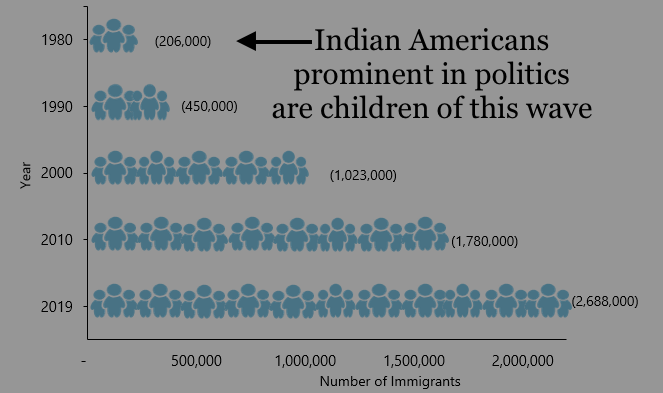
Razib Khan makes an interesting point on Twitter about how we’ll likely see a lot more Indian American politicians over the next 20 years
I initially saw this on Twitter, but would highly recommend giving the Breakthrough Institute’s full article on NEPA litigation a read. TL;DR: individuals, environmental groups, and communities have been suing energy and infrastructure projects at greater rates, resulting in substantial delays… but those suits are frequently (~80% of cases) a total waste of time and energy
Our findings suggest that NEPA litigation at this level rarely changes environmental outcomes or protects environmental justice communities. Instead, judicial review of NEPA decisions largely serves as an advocacy tool for a small number of well-organized nonprofits to stall projects that do not align with their values
One of many things worth reading on Casey Handmer’s blog is this dive into how the “solar industrial revolution is the biggest investment opportunity in history.” The basic argument is that as solar PV gets increasingly cheap and abundant… there’s a whole bunch of incredibly cool, sci-fi level shit that becomes feasible. Some of what he points to is pretty well understood by now — like thermal energy storage. But a lot of it (e.g., electrocatalysis) is truly pretty crazy. It’s a fun read
To a good approximation, oil is the antidote to poverty… Solar PV is not just a partial substitute for oil, it’s a cheaper and better energy source in every way that matters
Stephen Smith (no, unfortunately not THAT Stephen Smith) wrote an excellent NYT op-ed on how elevator costs in the US have skyrocketed, unlike in Europe. While it’s a fun dive into an industry most of us don’t think about too much, it’s also reflective of some of the broader challenges we face building infrastructure and housing in the US right now
America’s reputation for unbridled capitalism and a stereotype of Europe as a backwater of overregulation are often turned on their head in the construction sector
This is now over 2 years old, but given my pending move to the city, I really do love this seemingly ridiculous — but actually surprisingly thought-out and sensible — ~$34B proposal by Jason Barr to expand Manhattan. If we all dreamed like this, the world could be a really fun place
Going forward, we will spend billions on climate change mitigation; we must build more housing; and we must protect lower Manhattan. I asked myself: Is there a way to do these things more efficiently and get a return on the investment? My answer: build out Manhattan 1760 acres into the harbor

I spent a while trying to figure out exactly how I felt about the Supreme Court’s Chevron ruling. There are many articles out there (correctly!) pointing out that much of the good policy work that we’ve been able to get through in the last 40 years was dependent on Chevron and now at risk. Many others disputing, however, that large bureaucracies are the way we should be doing policy in the first place. While still honestly conflicted about it, I probably most enjoyed the Economist’s take:
Unsurprisingly for a decision that sweepingly reasserts judicial power, there is only one clear winner: lawyers.
 Ben Thomas
Leave a comment